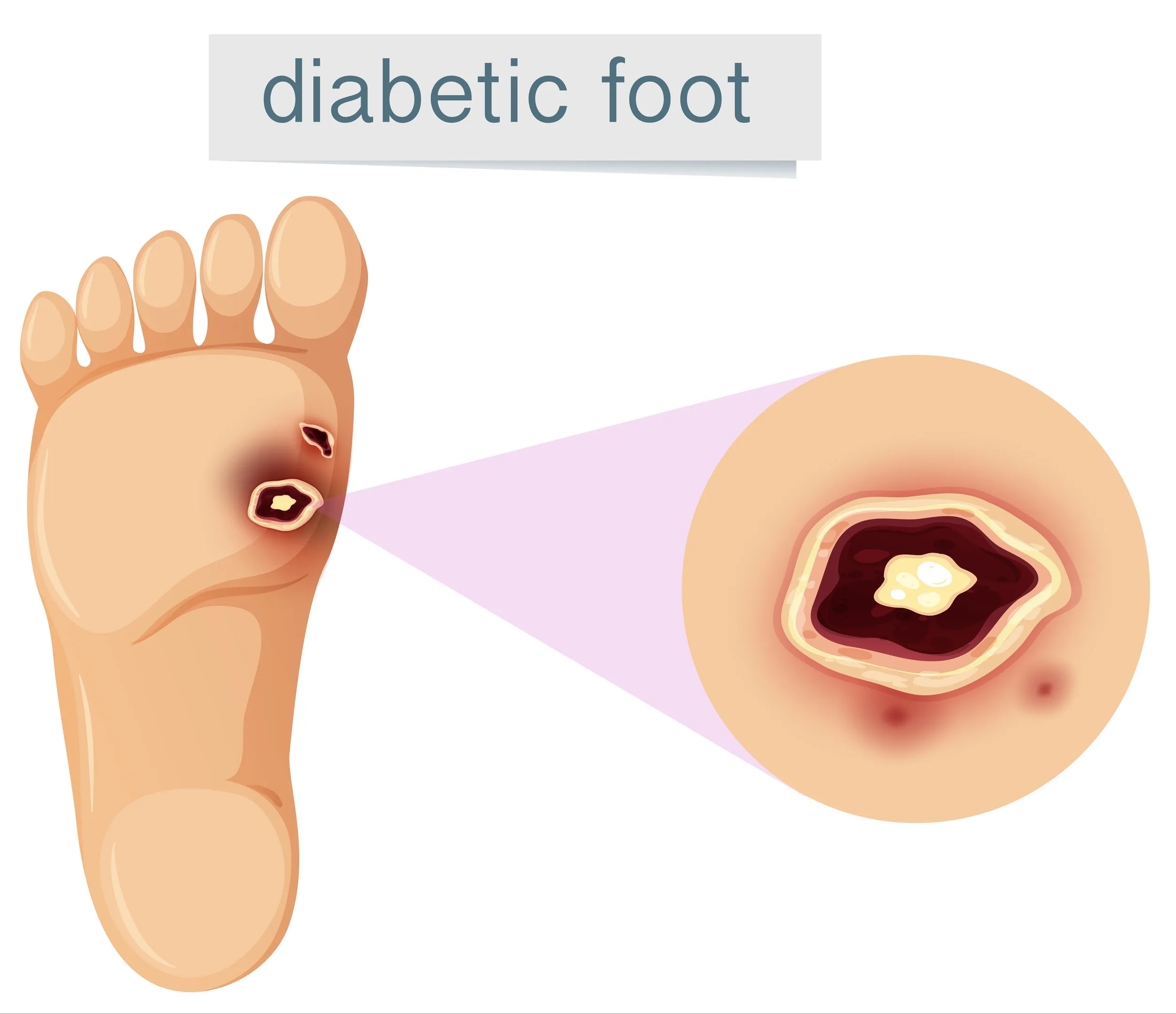
A small blister, cut, or pressure sore on the foot can become a significant problem for someone living with diabetes. Reduced sensation may prevent the injury from being noticed early, while circulation problems and infection can interfere with healing.
A diabetic foot specialist can assess wounds that are persistent, infected, painful, discoloured, or otherwise concerning.
Why Are Foot Wounds Different in Diabetes?
Long-term diabetes can affect nerves and blood vessels.
Reduced nerve sensation means a person may not immediately feel:
- Cuts
- Blisters
- Shoe pressure
- Burns
- Small foreign objects
- Repetitive friction
If circulation is also reduced, damaged tissue may heal more slowly.
Warning Signs That Need Attention
People with diabetes should routinely inspect their feet rather than waiting for pain.
Seek assessment for:
- A wound that is not healing
- Redness or swelling
- Pus or unusual discharge
- Bad odour
- Increasing warmth
- Skin colour changes
- Blackened tissue
- Fever with a foot wound
- New numbness
- Persistent swelling
Severe infection can spread beyond the original wound, which makes early treatment important.
What Does Diabetic Foot Management Involve?
There is no single treatment for every diabetic foot wound.
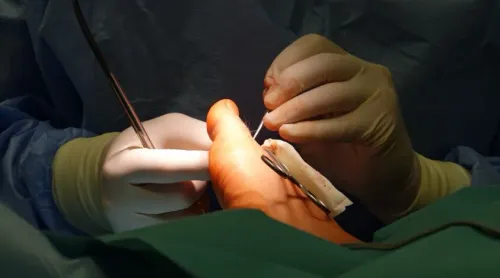
Management may include wound assessment, infection control, appropriate dressings, pressure reduction, removal of unhealthy tissue when indicated, blood sugar management, and assessment of circulation.
More complicated wounds may require coordinated medical or surgical care.
Dr Khyati Shroff Surgical Clinic - Laser Proctocare provides surgical evaluation for patients with diabetic foot concerns, including wounds that require closer assessment.
Daily Foot Care Can Reduce Risk
People with diabetes can take practical precautions:
- Inspect both feet every day
- Check between the toes
- Wear properly fitting footwear
- Avoid walking barefoot
- Keep feet clean and dry
- Do not cut corns or calluses at home
- Manage blood glucose as advised
- Report new wounds promptly
Patients in Mumbai Central, Mahalaxmi, Byculla and neighbouring parts of Mumbai, Maharashtra should also consider regular foot checks if they have reduced sensation or a previous history of diabetic wounds.
The absence of severe pain does not necessarily mean a diabetic foot wound is minor. Reduced sensation itself can hide the seriousness of an injury. Early identification and appropriate wound management can help prevent a small problem from progressing into a much more difficult one.
Keywords