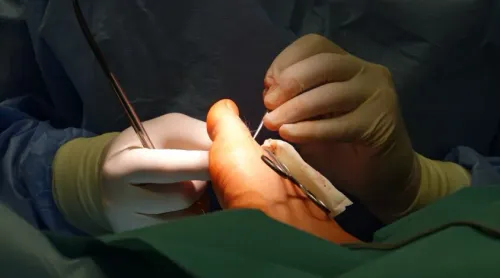
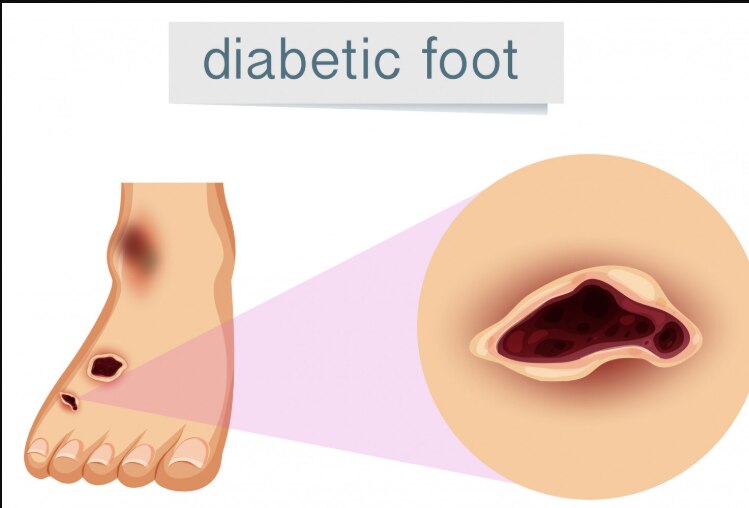
The right operation depends on what is damaging the foot: dead tissue, a pocket of pus, infected bone, inadequate blood flow, pressure from a deformity, or an isolated infected toe. By the end, you will know which examinations separate these problems, when non-surgical treatment comes first, and what to ask before agreeing to a procedure.
Key takeaways
- Match surgery to infection, blood-flow problems, pressure, or damaged tissue.
- Choose wound care first when infection and blood supply can be managed without urgent removal.
- Ask for circulation, imaging, infection, and tissue-viability tests before surgery.
- Compare amputation levels by healing prospects, walking function, and rehabilitation needs.
Match the operation to the actual foot problem
A diabetic foot operation should target the tissue or force causing the damage, not merely the wound’s location. Document infection severity, blood supply, and mechanical pressure before choosing among diabetic foot operation options.
| Option | What it treats | Operation that fits |
|---|---|---|
| Dead or nonviable tissue | Black tissue, slough, or exposed unhealthy structures | Sharp or operative debridement, preserving viable skin, tendon, muscle, and bone |
| Abscess or spreading infection | A pocket of pus or deep soft-tissue infection | Incision and drainage, with debridement and antibiotics when needed |
| Bone infection | Osteomyelitis shown by examination, X-ray, or MRI | Limited bone resection, sometimes combined with debridement or amputation |
| Poor arterial circulation | Ischaemia preventing healing | Vascular assessment and, when indicated, angioplasty, stenting, or bypass before closure or major amputation |
| Pressure ulcer | Repeated loading beneath a toe, heel, or metatarsal | Off-loading first; corrective tendon or bone surgery if pressure persists |
| Deformity | A bent toe, prominent bone, or Charcot-related collapse | Reconstructive bone or tendon surgery after infection and circulation are controlled |
| Isolated infected toe | Infection confined to one toe with adequate blood flow | Toe amputation or ray amputation, removing the toe and its metatarsal |
A “small” amputation is not automatically safer. Leaving infected or poorly perfused tissue creates a stump that breaks down, while removing too much reduces walking function.
Ask about ankle pressure below 50 mmHg, ABI below 0.5, toe pressure below 30 mmHg, or transcutaneous oxygen below 25 mmHg. These findings require urgent vascular review before definitive surgery.
When wound care is safer than immediate surgery
Wound care can come before an operation when a diabetic foot ulcer has no abscess requiring drainage, no dead tissue, no exposed or infected bone, and adequate blood flow.
For a plantar neuropathic forefoot or midfoot ulcer, effective pressure relief is usually safer than cutting first: use a non-removable knee-high device, such as a total-contact cast or irremovable walker, when clinically safe.
- Clean and dress the wound regularly, then measure its size and depth. A shrinking, healthy wound supports continued conservative care.
- Use antibiotics only for clinical infection, such as spreading redness, warmth, swelling, pus, foul drainage, or systemic illness. Antibiotics do not heal an uninfected ulcer.
- Check circulation before expecting a wound to close. An ankle pressure below 50 mmHg, ABI below 0.5, toe pressure below 30 mmHg, or transcutaneous oxygen below 25 mmHg warrants urgent vascular review.
- Replace tight or worn footwear with therapeutic shoes, custom insoles, or a temporary off-loading device. Remove the pressure source, or the ulcer will reopen.
Surgery becomes more relevant when infection forms an abscess, dead tissue persists, bone infection is suspected, or an ulcer repeatedly returns because of a fixed deformity despite proper off-loading. Procedures for that deformity can create transfer pressure or a new ulcer, so pressure monitoring and postoperative footwear remain essential.
If you are considering foot ulcer surgery in Mumbai, ask who assessed blood flow, bone involvement, infection, glucose control, and the off-loading plan before accepting an operation.
The tests that determine whether tissue can be saved
Ulcer size alone does not decide whether tissue can be saved. Examination must establish infection, blood supply, and mechanical pressure. The clinician probes the wound for depth, exposed tendon or bone, crepitus, spreading redness, sensation loss, pulses, renal disease, and your ability to stay off the foot.
Check the HbA1c and obtain deep tissue or bone cultures; a superficial swab can misidentify the infection.
Ask whether these results have been recorded before choosing diabetic foot surgery in Mumbai:
- Foot X-ray for gas, deformity, foreign body, or bone destruction; MRI when osteomyelitis remains uncertain.
- Arterial Doppler, ankle-brachial index, toe pressure, or transcutaneous oxygen. ABI below 0.5, ankle pressure below 50 mmHg, toe pressure below 30 mmHg, or transcutaneous oxygen below 25 mmHg demands urgent vascular assessment.
- Probe-to-bone findings and a bone sample obtained during surgery when bone infection is suspected.
| Option | Findings that support it | What changes the plan |
|---|---|---|
| Debridement | Dead, infected, or nonviable tissue with viable structures underneath | Repeat assessment may reveal further tissue loss |
| Drainage | Abscess, pus, fluctuance, or deep collection | Spreading infection requires urgent source control |
| Bone surgery | Persistent osteomyelitis or exposed infected bone | Poor perfusion may require revascularisation first |
| Revascularisation | Severe ischaemia or poor healing potential | Restore flow before closure or major amputation |
| Reconstruction | Clean, perfused wound with stable tissue and manageable pressure | Neuropathy or failed off-loading increases breakdown risk |
| Amputation | Irreversible tissue death, uncontrolled infection, or unsalvageable bone | Preserve the lowest level that can heal and function |
Choosing between toe, ray, partial-foot, and higher amputation
The lowest safe amputation level is the most distal level with controlled infection, adequate blood flow, viable skin and muscle, and a stump that can tolerate walking and footwear. Ulcer size alone does not decide it.
The surgeon combines examination, probe-to-bone findings, X-ray or MRI, arterial Doppler, ankle-brachial index, toe pressure, and your ability to off-load the foot.
| Option | When it applies | Trade-off |
|---|---|---|
| Toe amputation | Infection or dead tissue is confined to one toe, with healthy tissue and adequate perfusion behind it | Preserves most of the foot, but altered balance or shoe pressure can create a new ulcer |
| Ray amputation | Infection extends into the toe bone or its metatarsal | Removes more infected bone, but widens the gap and can shift pressure onto neighbouring metatarsals |
| Partial-foot amputation | Several toes, forefoot tissue, or deeper infection cannot be preserved | Retains a shorter weight-bearing foot, but requires careful footwear, gait training, and lifelong pressure monitoring |
| Higher amputation | Infection, tissue death, or poor blood supply reaches the midfoot, hindfoot, or beyond | Offers a healthier healing level, but costs more function and demands prosthetic rehabilitation |
Severe ischaemia—ankle pressure below 50 mmHg, ABI below 0.5, toe pressure below 30 mmHg, or transcutaneous oxygen below 25 mmHg—requires urgent vascular assessment before definitive closure or major amputation. For diabetic foot surgery options in Mumbai, ask who measured circulation and what off-loading plan follows the operation.
Compare surgeons by the recovery plan, not just the procedure name
A surgeon’s skill is only part of the decision; the recovery plan determines whether the wound stays protected after you leave. Compare the answers from each diabetic foot surgeon near me before choosing an operation.
| Plan element | What to ask | Why it matters |
|---|---|---|
| Team | Who assesses blood flow, infection, bone, glucose, footwear, and rehabilitation? | Complex wounds need coordinated input from surgery, vascular care, diabetology, infection specialists, wound care, and orthotics. |
| Care setting | Is this day-care surgery, an overnight admission, or a longer hospital stay? | Fever, extensive infection, poor circulation, or intravenous antibiotics may make discharge unsafe. |
| Dressings | Who changes the dressing, how often, and what requires urgent review? | A soaked dressing, spreading redness, foul drainage, or increasing pain can signal deterioration. |
| Weight-bearing | How many days can you stand, and which foot or leg receives weight? | Early pressure can reopen a closure or deepen an ulcer. |
| Off-loading | Will you receive a cast, removable walker, surgical shoe, or custom orthosis? | The wrong footwear leaves pressure on the original wound or creates a new one. |
| Rehabilitation | When does physiotherapy begin, and what exercises are allowed? | Delayed movement can cause stiffness; excessive movement can disrupt healing. |
Ask how glucose will be monitored during admission and after discharge, who reviews results, and when follow-up occurs. At Dr Khyati Shroff Surgical Clinic -laser Proctocare, ask for the same written plan: wound reviews, footwear changes, physiotherapy, and the signs that could require repeat debridement, drainage, or further amputation.
Related services
Diabetic Foot Surgery Service Diabetic foot complications are a serious concern for individuals with diabetes. View service → |
Toe Amputations Toe Amputation Surgery Service Toe amputation is a specialized surgical procedure performed to remove a severely damaged, infected, or non-viable toe... View service → |
Frequently asked questions
When is wound care safer than immediate diabetic foot surgery?
Wound care is safer when infection is controlled, blood supply supports healing, and pressure relief can protect the wound without urgent removal of infected or dead tissue.
Which tests determine whether diabetic foot tissue can be saved?
Doctors assess blood flow, infection depth, bone involvement, and tissue viability using circulation tests, blood tests, X-rays, and further imaging when needed.
How do toe, ray, partial-foot, and higher amputations differ?
A toe amputation removes one toe, a ray amputation removes the toe and its metatarsal, a partial-foot amputation removes more forefoot, and a higher amputation removes tissue above the foot when disease cannot be safely contained.
How should you compare diabetic foot surgeons in Mumbai?
Compare the proposed procedure, healing plan, pressure relief, dressing schedule, glucose management, rehabilitation, follow-up, and clear criteria for escalation—not just the operation’s name.
Related services
Gangrene Surgery Service Gangrene is a serious and potentially life-threatening condition caused by loss of blood supply or severe infection leading to tissue death. View service → |
Ulcer Healing Surgery Service Chronic or non-healing ulcers can cause severe pain, infection, and serious health complications if left untreated. View service → |
Keywords