
A diabetic toe needs removal when infection, dead tissue, infected bone, or severe loss of blood flow cannot be controlled while preserving a safe, healable and functional toe. By the end, you will know which warning signs need same-day assessment, what tests determine whether the toe can be saved, and what to ask before agreeing to surgery.
Key takeaways
- Seek same-day care for spreading infection, wet gangrene, severe pain, or a cold discoloured toe.
- Amputation becomes more likely with dead tissue, uncontrolled deep infection, or infected bone.
- Ask about ankle-brachial pressure, toe pressure, Doppler imaging, X-ray, MRI, and bone sampling.
- Doctors may try antibiotics, wound debridement, drainage, revascularisation, and pressure relief first.
When is a diabetic toe an emergency rather than a routine wound?
A diabetic toe needs same-day emergency assessment when infection is spreading, blood flow is failing, or tissue is dying. When does diabetic foot need toe amputation in Mumbai? The medical indications are the same anywhere: uncontrolled deep infection, irreversible tissue death, infected bone, wet gangrene, or non-viable tissue that cannot heal safely.
A surgeon must also assess whether restoring blood flow could save more tissue before infected toe removal.
Seek emergency care today if you notice:
- Black or purple skin, wet gangrene, or a cold, pale foot
- Redness or swelling increasing over hours, red streaking, or foul-smelling discharge
- A deep abscess, exposed or infected bone, necrotizing infection, or compartment syndrome
- Fever, confusion, severe weakness, or low blood pressure
A mild, local infection with limited redness and no deep abscess, ischemia, systemic illness, or rapidly worsening change can often receive outpatient wound care, pressure off-loading, dressings and prescribed antibiotics. An emergency department or surgical team is needed when infection is severe or ischemia threatens the toe.
Waiting for routine antibiotics in a rapidly worsening infection can permit tissue loss or bloodstream infection; antibiotics cannot drain an abscess or revive dead tissue.
Do not use pain as your safety test. Neuropathy can remove protective sensation, leaving a dangerous ulcer or deep infection painless. Even a painless wound needs urgent review if its colour, smell, drainage, swelling or temperature changes.
Which findings show that the toe can no longer be safely saved?
Redness, swelling, an ulcer, or a local infection does not automatically mean the toe must be removed. Amputation becomes more likely when tissue is non-viable, wet gangrene is spreading, pus cannot be drained safely, infection reaches bone that cannot be controlled, or the toe cannot remain safe and functional after treatment.
| Finding | More consistent with salvage | More concerning for removal |
|---|---|---|
| Colour and tissue response | Pink tissue that bleeds and responds to gentle stimulation | Black, grey, or dusky tissue that does not bleed or respond |
| Drainage and smell | Little or no drainage, without foul odour | Thick pus, foul smell, or rapidly increasing wetness |
| Wound depth | Superficial ulcer with no exposed tendon or bone | Deep wound, exposed bone, or a probe reaching bone |
| Spread | Redness limited around the wound | Spreading redness, swelling, wet gangrene, or tissue breakdown |
| Bone involvement | Selected forefoot osteomyelitis without exposed bone, poor circulation, or urgent drainage need | Infected or necrotic bone that cannot be controlled safely |
Dry black tissue is not proof that immediate removal is correct. It may be dry gangrene, which requires assessment of blood flow and tissue boundaries; revascularisation can be needed before surgery. Wet gangrene with pus, foul drainage, spreading infection, or systemic illness needs urgent source control.
The surgeon does not simply cut off the visible black tip. The level depends on dead or infected tissue, blood supply, the chance of closing and healing the wound, and future function. Removing too little leaves infection behind; removing too much increases pressure on neighbouring toes.
A painless wound can still be dangerous because neuropathy removes warning pain. For toe amputation in Mumbai, ask for this examination before choosing infected toe removal.
How do blood-flow tests and bone tests change the decision?
Before diabetic toe surgery in Mumbai, doctors must establish whether the toe has enough blood flow to heal and whether infection has reached bone. Examine wound depth, drainage, odour, colour, exposed bone and tissue response; check pedal pulses, Doppler waveforms, foot temperature and colour against the other side.
Use these circulation tests:
- Measure the ankle-brachial index (ABI), toe-brachial index (TBI) and toe pressures.
- Treat a normal or high ABI cautiously: diabetes can make ankle arteries incompressible, hiding ischemia.
- Request urgent vascular assessment for a cold foot, weak pulses, absent Doppler signals or very low toe pressures.
- Check whether revascularisation is needed before tissue removal; poor perfusion can prevent the surgical wound from closing.
A diabetic foot surgeon in Mumbai should investigate suspected osteomyelitis with a probe-to-bone test, plain X-rays and inflammatory markers such as ESR, CRP or procalcitonin. X-rays can reveal gas or bone destruction; order MRI when examination, X-ray and blood tests leave uncertainty.
A superficial swab often identifies colonising bacteria rather than the bone infection. When identifying the organism will change treatment, a bone specimen is more useful, ideally obtained during biopsy or surgery.
Do not remove a black toe based on appearance alone. Dry gangrene may require circulation planning, while wet gangrene or spreading infection needs urgent source control. Blood-flow results can change both the timing and level of amputation.
What can doctors try before removing the toe?
Amputation is not automatic for a red, swollen or ulcerated toe. Limb-sparing treatment is reasonable when infection is mild, tissue remains viable, blood flow is adequate, and there is no deep abscess or rapidly spreading infection.
- Give appropriately selected antibiotics for a mild infection.
- Drain an abscess; antibiotics cannot empty a pocket of pus.
- Remove dead tissue through debridement.
- Use dressings and off-load pressure with suitable footwear or a protective device.
- Improve glucose management to support immune response and healing.
- Restore blood flow through revascularisation when ischemia limits healing.
Antibiotics cannot revive dead tissue, and they cannot reliably control infected or necrotic bone without drainage or debridement. Treatment must control the source, not merely suppress bacteria on the wound surface.
Selected forefoot osteomyelitis can sometimes be treated with antibiotics without bone resection when there is no immediate need for drainage, no peripheral artery disease and no exposed bone. Delay becomes unsafe when infection remains uncontrolled, bone is necrotic or infected tissue cannot be preserved safely. Those findings support infected toe removal.
A superficial swab should not decide this operation; when feasible, a bone specimen gives better evidence about the causative organism.
What should you plan before and after toe amputation in Mumbai?
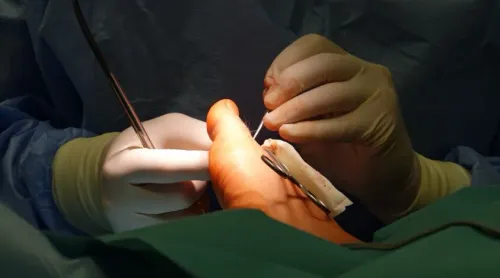
Planning toe amputation in Mumbai starts with a named team and a written recovery plan. Ask the diabetic foot surgeon in Mumbai who assessed blood flow, whether vascular review is needed, whether infected bone was removed, whether a bone-margin culture was taken, how the wound will be protected and who will review it.
| Situation | Antibiotic plan in 2023 IWGDF/IDSA guidance | What it does not replace |
|---|---|---|
| Positive bone-margin culture after minor amputation | Up to 3 weeks | Drainage, debridement and blood-flow treatment |
| Osteomyelitis treated without bone resection | About 6 weeks | Source control or revascularisation when required |
| No residual bone infection | Duration based on the remaining infection | Clinical review and wound protection |
These durations are not automatic prescriptions. A vascular specialist must address severe ischemia, while an infection specialist can help select treatment for osteomyelitis. Dr Khyati Shroff Surgical Clinic -laser Proctocare is one Mumbai option to discuss surgical assessment and coordination, but ask any team for the complete vascular, infection and aftercare plan.
Protect healing with:
- A temporary off-loading device and clear weight-bearing instructions
- Scheduled wound reviews, dressing guidance and warning signs
- Glucose management and footwear changes before normal walking resumes
- Pressure checks on neighbouring toes, which can ulcerate after load shifts
A painless wound still needs review because neuropathy can hide worsening damage.
Related services
Toe Amputations Toe Amputation Surgery Service Toe amputation is a specialized surgical procedure performed to remove a severely damaged, infected, or non-viable toe... View service → |
Diabetic Foot Surgery Service Diabetic foot complications are a serious concern for individuals with diabetes. View service → |
Frequently asked questions
When is a diabetic toe an emergency rather than a routine wound?
Seek same-day emergency assessment when infection spreads, the toe becomes black or wet, blood flow fails, or you develop fever, confusion, severe pain, swelling, pus, or a foul smell.
Which findings show that the toe can no longer be safely saved?
Irreversible tissue death, wet gangrene, uncontrolled deep infection, infected bone, or tissue that cannot heal safely despite treatment can justify toe amputation.
How do blood-flow tests and bone tests change the decision?
Ankle-brachial pressure, toe pressure, Doppler ultrasound, and other vascular tests show whether tissue can heal. X-ray, MRI, and bone sampling help identify osteomyelitis and its extent.
What can doctors try before removing the toe?
Depending on the findings, treatment can include antibiotics, drainage, wound debridement, removal of limited dead tissue, revascularisation, pressure relief, and glucose control.
What should you plan before and after toe amputation in Mumbai?
Before surgery, discuss blood-flow testing, infection treatment, the planned amputation level, diabetes control, footwear, and wound care. Afterward, plan dressing changes, off-loading, follow-up, rehabilitation, and monitoring for recurrent infection.
Related services
Toe pain / Abscess Treatment Service Toe pain and abscesses can cause severe discomfort, swelling, redness, and difficulty in walking. View service → |
Gangrene Surgery Service Gangrene is a serious and potentially life-threatening condition caused by loss of blood supply or severe infection leading to tissue death. View service → |
Ulcer Healing Surgery Service Chronic or non-healing ulcers can cause severe pain, infection, and serious health complications if left untreated. View service → |
Ingrown toenail removal Service Ingrown toenails can cause intense pain, swelling, redness, and infection around the nail edges. View service → |
Keywords