A lump that looks like a lipoma still needs a structured assessment before anyone removes it. By the end, you will know which findings call for imaging or biopsy, what removal involves, how to weigh symptom and cosmetic benefits against surgical risks, and how to plan recovery and travel in Mumbai.
Key takeaways
- A growing, painful or fixed lump needs assessment before removal.
- Ultrasound, MRI or biopsy comes first when examination leaves doubt.
- Arrange wound review, transport and reduced activity after surgery.
- Send every removed lump for laboratory examination and watch for infection signs.
How doctors assess a lump before calling it a lipoma
A doctor does not call a lump a lipoma from appearance alone. During an initial examination, the doctor asks how long it has been present, how quickly it has grown, whether it hurts, and whether trauma preceded it.
The assessment also records the lump’s size, depth, mobility, skin changes, and effect on nearby nerves or blood vessels. This evaluation guides safe soft tissue lump removal in Mumbai or elsewhere.
1. You lie or sit so the area can be inspected and felt. A typical lipoma is soft or rubbery, lies beneath the skin, moves slightly when pushed, and grows slowly without redness or ulceration.
2. The doctor checks whether the lump is superficial or attached to deeper tissue. A firm, fixed, deep, rapidly enlarging, persistently painful, recurrent, or approximately 5 cm or larger mass needs further assessment before routine excision.
3. The doctor compares the findings with possible alternatives. Ultrasound can show whether a superficial lump is fatty, cystic, fluid-filled, or vascular; MRI, core-needle biopsy, or another investigation is chosen when the mass is deep or atypical.
| Lipoma | Usually soft, mobile, slow-growing, and painless |
|---|---|
| Epidermoid cyst | Rounder lump with a skin opening; may become inflamed or infected |
| Abscess | Tender, warm, red, and sometimes associated with fever or pus |
| Enlarged lymph node | Often firm and located in a recognised drainage area |
| Hernia | Changes size with coughing, standing, or straining |
| Hematoma | Follows injury and may change colour as blood resolves |
| Soft-tissue tumour | May be firm, fixed, deep, painful, or rapidly enlarging |
When ultrasound, MRI or biopsy should come before removal
A lump that is hard, fixed, deep, rapidly enlarging, persistently painful, red, ulcerated, recurrent, or about 5 cm or larger should not go straight to routine office excision. These features can indicate a soft-tissue tumour, abscess, haematoma, or another condition requiring a planned work-up.
| Investigation or choice | What it clarifies | When it applies |
|---|---|---|
| Ultrasound | Solid or cystic structure, depth, blood flow, and nearby anatomy | A superficial lump has an uncertain diagnosis or feels different from a typical lipoma |
| MRI | Exact extent and relationship to muscle, nerves, and vessels | The mass is deep, large, anatomically complex, recurrent, or suspicious |
| Core-needle biopsy | Tissue diagnosis before cutting out the mass | Imaging or examination raises concern for sarcoma or another tumour |
| Observation | Whether a stable, harmless-appearing lump changes | A small, superficial, painless lump has a confident lipoma diagnosis and causes no functional or cosmetic concern |
Observation is often the better choice when the lump is stable, soft, mobile, and symptom-free. Arrange review if it grows, becomes painful, hard, fixed, inflamed, or changes the overlying skin; do not assume a new lump near a scar is normal healing.
If biopsy is needed, avoid unplanned lipoma removal surgery in Mumbai or elsewhere before the result and treatment plan are clear. Removing a sarcoma through a small office incision can compromise later surgery and leave inadequate margins. A surgeon can then match imaging, biopsy, and the safest operation.
What the procedure, anaesthesia and Mumbai travel plan involve
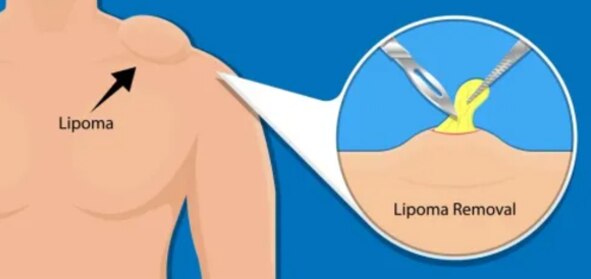
A small superficial lump is usually removed as an outpatient procedure. After consent and skin marking, the surgeon injects local anaesthetic, makes an incision, separates the lump from surrounding tissue, removes it with its capsule when possible, controls bleeding, and closes the wound with sutures. The specimen is sent for histopathology when advised.
Anaesthesia depends on the lump’s size, depth, location, and your health:
| Option | What you experience | Planning requirement |
|---|---|---|
| Local anaesthetic | You stay awake while the area is numb; you may feel pressure, not sharp pain. | Allow roughly half a day, including preparation and observation. |
| Local anaesthetic with sedation | You feel drowsy and need monitoring during and after removal. | Arrange an escort and do not drive home. |
| General anaesthesia | You are fully unconscious in a theatre setting. | Allow more recovery time and arrange an escort; an overnight stay depends on the operation. |
For anyone weighing lipoma excision surgery for benefits in Mumbai, set aside at least half a day for a straightforward case and longer for a large or deep lesion. Do not schedule heavy work, gym training, or long travel immediately afterward.
Dr Khyati Shroff Surgical Clinic -laser Proctocare can help coordinate the practical plan, but ask specifically whether you need sedation, a theatre procedure, a driver, or a follow-up visit before booking travel. If you are travelling from outside Mumbai, keep accommodation nearby until you are comfortable walking, eating, and managing the dressing.
Related services
Lipoma Excision Surgery Service A lipoma is a soft, fatty lump that develops under the skin. View service → |
Lump Excision Service A lump or swelling anywhere on the body can cause discomfort, pain, or cosmetic concern. View service → |
The real benefits, specimen testing and possible complications
Removal can eliminate a lump that rubs against clothing, causes pressure pain, restricts movement, or worries you because it is growing. It does not improve general health, and the benefit is limited if the lump causes no symptoms.
Lipoma removal surgery in Mumbai leaves an incision and scar; scar length, colour, and visibility cannot be guaranteed, even when the cosmetic result is a goal.
Histopathology is important because the removed tissue is examined under a microscope rather than judged by appearance alone. The report can confirm a benign lipoma or reveal an epidermoid cyst, another tumour, or an unexpected diagnosis. Send the specimen for testing, particularly when the lump is large, deep, recurrent, atypical, or the diagnosis was uncertain.
This safeguard also matters in soft tissue lump removal in Mumbai, where different conditions can look similar before removal.
Possible complications include:
- Bleeding or a haematoma beneath the wound
- Infection or a seroma, which is a pocket of fluid
- Wound separation or a prominent scar
- Numbness from irritation or injury to a nearby nerve
- Injury to a nearby blood vessel
- Recurrence if residual tumour or its capsule remains
These risks increase with large, deep, recurrent, or tightly located masses. A new lump near the scar needs examination rather than being dismissed as normal healing.
Lipoma excision recovery: wound care, activity and red flags
Most small, uncomplicated excisions allow same-day discharge. Pain, bruising and swelling are usually strongest during the first few days, then improve; recovery depends on the wound’s size and depth, the anaesthetic used and your work.
Follow the dressing instructions exactly, keep the incision clean and dry as directed, and attend the scheduled wound review or suture removal. Do not apply creams, powders or antiseptics unless your surgeon approves them. Loose clothing reduces rubbing over the site.
For lipoma excision recovery in Mumbai, postpone heavy lifting, strenuous exercise and activities that stretch or repeatedly press on the wound until the operating clinician confirms that it is secure. Desk work may resume sooner than manual work, but pain and wound tension should guide your pace.
Seek prompt medical review if you notice:
- Redness or warmth that is spreading
- Increasing swelling, a firm painful collection or fresh bleeding that does not stop with firm pressure
- Pus, foul-smelling drainage or fever
- Pain that is worsening or uncontrolled despite the prescribed medicine
- Wound edges separating
- New or worsening numbness, weakness or loss of sensation
If you have diabetes, follow your glucose plan and check readings as advised; poor control, smoking, reduced circulation and neuropathy can delay healing and raise infection risk. A new lump near the scar needs examination, because it could reflect a seroma, haematoma or uncommon recurrence rather than normal healing.
Frequently asked questions
How do doctors assess a lump before calling it a lipoma?
They ask how long it has been present, how quickly it grew, whether it hurts and whether trauma preceded it. Examination also checks its size, movement, depth and attachment to nearby tissue.
When should ultrasound, MRI or biopsy come before lipoma removal?
Imaging or biopsy comes first when the lump is deep, rapidly enlarging, painful, fixed, unusually large or not clearly benign on examination. The clinician chooses the test based on the lump’s location and findings.
What does lipoma excision surgery in Mumbai involve?
The plan covers the incision, anaesthesia, expected procedure time, transport, wound review and activity restrictions. Ask how soon you can travel and who will accompany you after the procedure.
What happens during lipoma excision recovery in Mumbai?
Keep the dressing and incision clean and follow instructions about bathing, medicines and activity. Contact the surgical team for increasing redness, swelling, warmth, pus, fever, uncontrolled pain or wound separation.
Related service
Swelling Excision Service Unusual swelling anywhere on the body can cause discomfort, pain, and concern. View service → |
Keywords